









×

Concept engineering
NFC tray coaster
RFID counter fence
PackBack × Burger King
Under NDA: the technical drawings of this project can’t be shown. This case study uses concept sketches, schemes and visualisations instead.

Product design problem
58%
of fast-food transactions include a drink (2024 QSR). Every one is a chance for a missed activation.


Staff forgets to scan the cup
Customer finishes the drink
Return machine rejects the cup
Customer walks back to the counter

Solution A
Add a small NFC chip in the bottom of the reusable cup.
Add an NFC activation point integrated into the tray, a small raised spot or podium where the cup is placed.
When the worker places the cup onto the marked spot of the tray, the cup is activated automatically.
Before
Worker must remember to scan the cup
After
Cup gets activated as part of normal tray assembly


Low theft risk
compared to a loose countertop device
Always in circulation
in the restaurant workflow
Easy for staff
“place cup on the tray spot”
Harder to forget
it is built into the serving action itself
Solution B
It works like the anti-theft gates in clothing stores, but here the goal is not security. It is activation reliability.
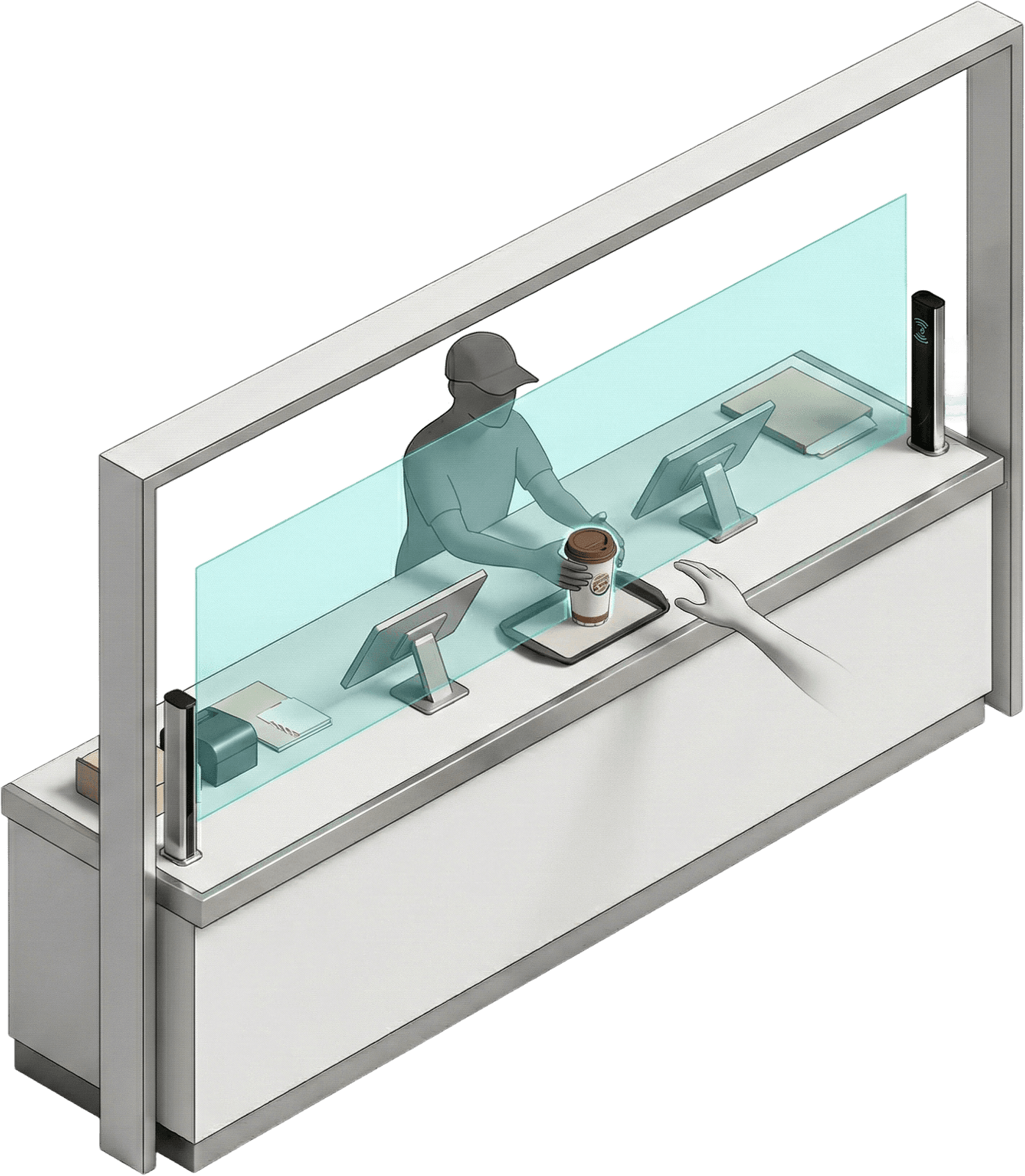

No manual scan step for staff
Automatic activation during normal handover
Lower chance of missed activations
Faster service at busy counter moments
Controlled scan zone: width and distance can be tuned
Reduced accidental activation of cups in storage, if the fence is placed correctly


Reader tower
Concept comparison
Activation reliability (missed activations)
+
++
B removes the “place on exact tray spot” dependency and catches cups during handover flow.
Fit with current staff workflow
+
++
B is more passive for staff. A still needs cup placement on the correct tray zone.
Risk of false / accidental activation
+
0
A is localized to one tray spot. B can be tuned, but RFID zones can drift or read unintended tags if setup is poor.
Technical complexity / integration effort
+
−
A is simpler hardware logic. B needs reader tuning, zone calibration, and counter-specific setup.
Cost to pilot and roll out
+
−
A is likely cheaper per pilot unit. B needs multiple readers/towers and more installation work.
Adaptability to different counter layouts
0
+
A depends on tray usage patterns. B can be adjusted with tower spacing or an extra tower, but adds complexity.